Microbiome Engineering for Crop Health
Revealing mechanisms driving microbial competition in the rhizosphere.
Working Group: Biomining
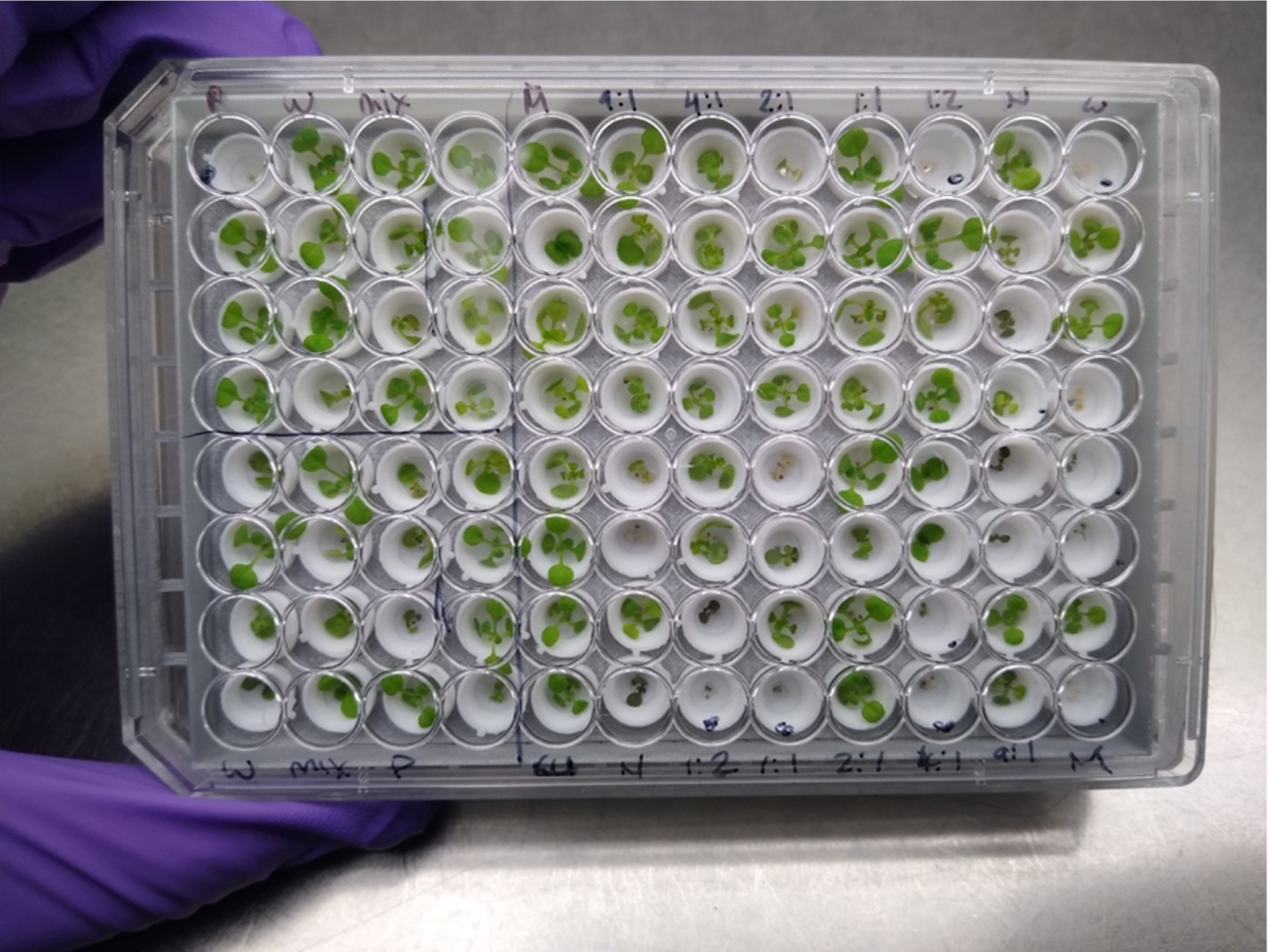
Plant roots host diverse microbial communities capable of promoting growth and protecting against pathogens, driving growing interest in engineering these communities to benefit crop health at scale. The success of microbiome manipulation, however, is often constrained by resident microbes excluding introduced strains, a phenomenon that limits the persistence and functional impact of engineered additions in the field. Understanding the ecological and genetic mechanisms that enable or prevent microbial establishment is therefore essential for improving microbiome function and translating laboratory gains into durable agricultural outcomes. A high-throughput Arabidopsis-Pseudomonas model system is being used to investigate the rules governing microbial community assembly in the rhizosphere, resolving how ecological context and genetic compatibility shape colonization success. In parallel, a rhizosphere-compatible functional metagenomic screening platform is under development to explore and harness the genetic potential of the root microbiome. Together, these approaches aim to inform actionable strategies for engineering resilient, productive plant microbiomes across diverse agricultural systems.
This work is in collaboration with the Haney Lab at the Pittsburgh University.
Related publications: Chen MY (co), Fulton LM (co), Huang I, Liman A, Hossain SS, Hamilton CD, et al. (2025) Order among chaos: High throughput MYCroplanters can distinguish interacting drivers of host infection in a highly stochastic system.