Lung Microbiome
Generating a lung microbiome in health and cancer.
Working Groups: Lung Microbiome and Pathways
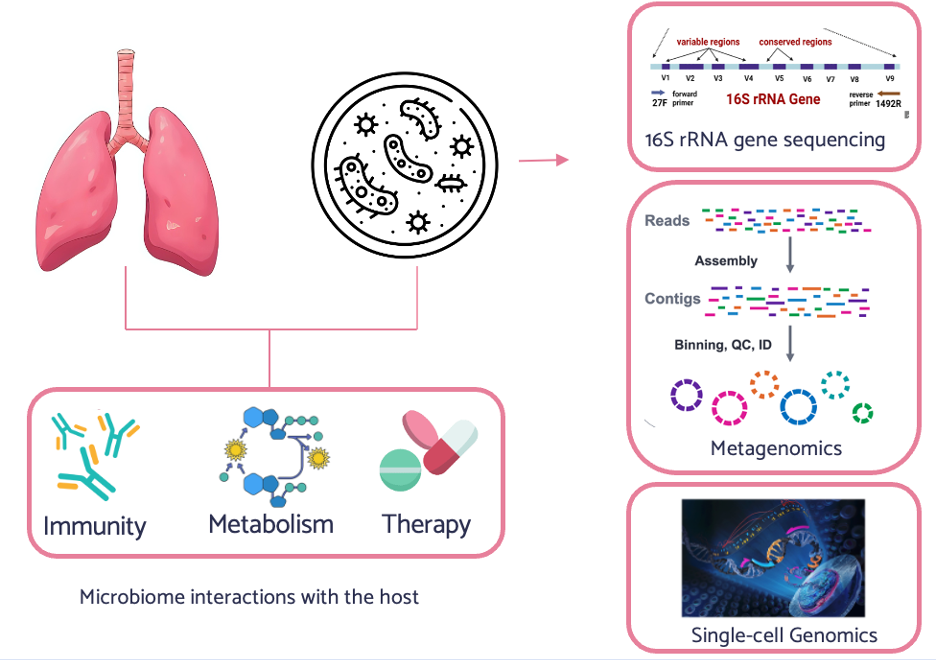
Lung cancer is the most commonly diagnosed cancer worldwide and, with a five-year survival rate of 22%, it is also the deadliest form of cancer, accounting for 1.8 million deaths annually. Prior work has established a critical role for the human microbiome in health and disease, and uncovering the dynamic diversity of the lung microbiome may open new avenues for early diagnosis. Studying the lung microbiome remains challenging, however, given its extremely low microbial biomass and the overwhelming proportion of host DNA, which constrain high-quality genome assembly. To address this, a single-cell genomics-based approach combined with host DNA depletion strategies is being developed to enable comprehensive characterization of the lung microbiome and construct the first atlas of the human lung microbiome. This atlas will support identification of changes in microbial community structure and candidate biomarkers associated with lung cancer, ultimately informing earlier and more robust diagnostic screening tools.