Deep Device Mining
Search functions for enzyme discovery and pathway engineering.
Ecosystem Type: Environmental and host-associated sources
Location: Variable with emphasis on Canadian sampling sites
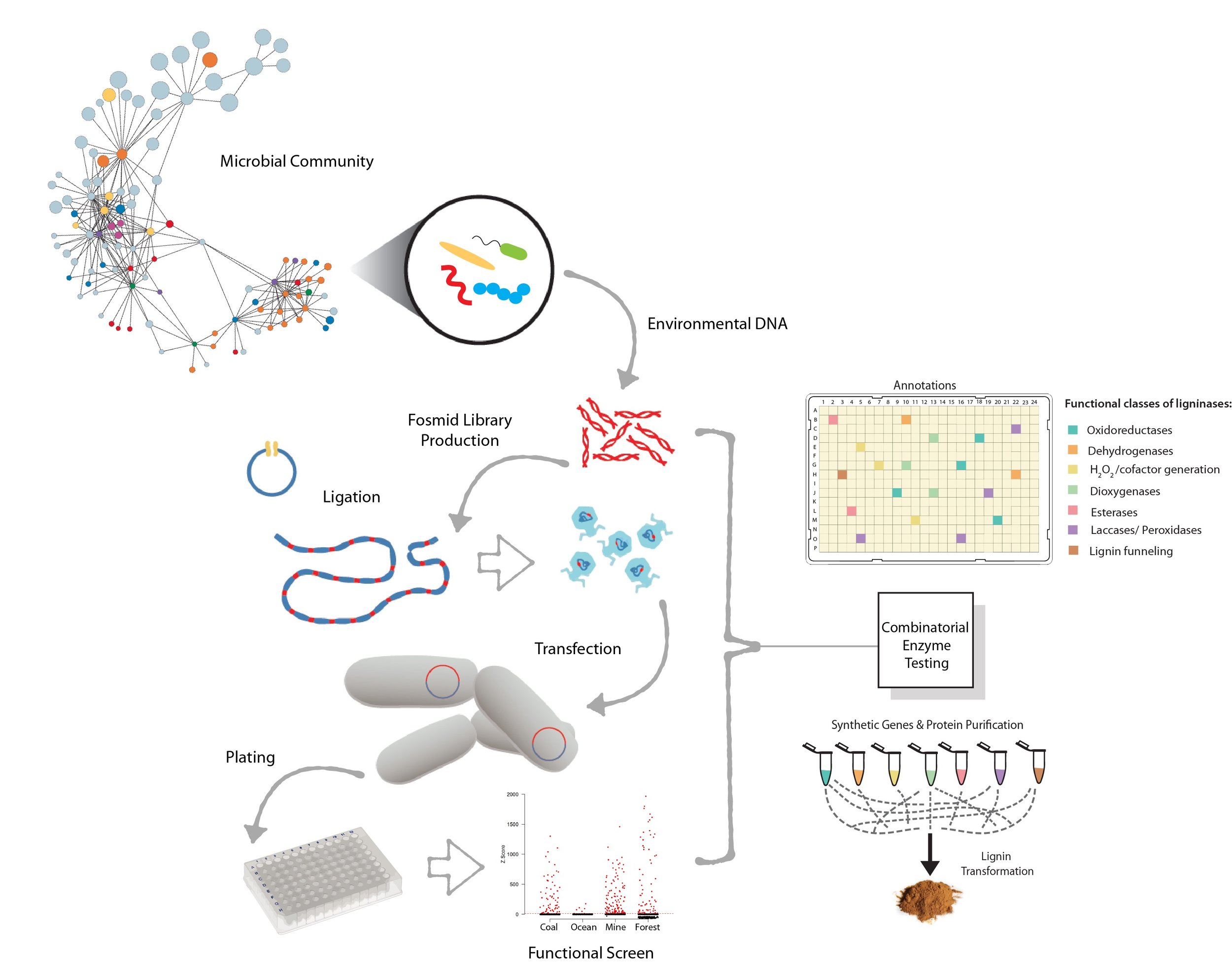
An increasingly important tool in biological engineering is deep device mining based on recovering genomic information (DNA) from the environment encoding activities of interest that can in turn be used to reprogram industrial strains or microbial communities. Engineered microbial communities expand upon the standardized part concept to include cellular organisms as carbon-based information processing units implementing a distributed metabolic algorithm. These BioFactories perform complex tasks more effectively than single cells, complement enzyme complexes mediating biomass conversion, and resist environmental perturbation.
We have developed a functional screening platform leveraging automation systems in the Biofactorial High-throughput Facility, involving large-insert (32-47kb) metagenomic (fosmid) libraries hosted in E.coli supporting high-throughput recovery and identification of biocatalysts from uncultivated microbial communities (PMID: 26231123, PMID: 21440432, PMID: 21307835, and PMID: 19776717). This screening platform, in combination with labeled substrates and whole cell biosensing, has successfully identified carbohydrate active enzymes (CAZymes) and putative ligninases from diverse phylogenetic backgrounds capable of catalyzing cellulose and lignin transformation. More recently we have developed selection strategies to enrich fosmids encoding resistance phenotypes to a wide range of lignin-derived monoaromatic compounds. Relevant primary publications related to functional screening include (PMID: 31182795, PMID: 31164449, PMID: 31080075, PMID: 30013164 and PMID: 23906845).